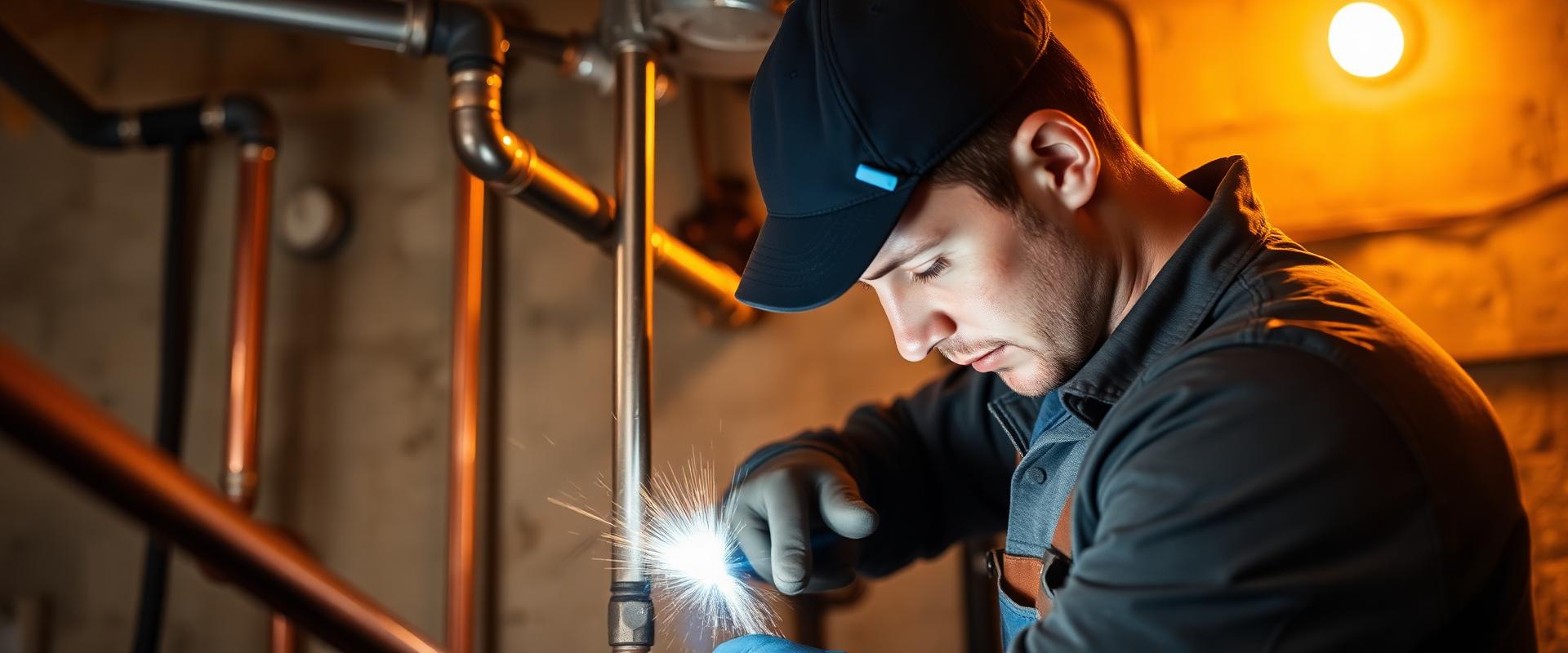
If a pipe has already burst and water is coming into your home, do not read this first. Shut the water off and call (720) 880-8064. The shutoff sequence is in the next section and the phone is faster. Everything after that is for the more common case: a faucet that stopped running on a cold morning, a line you think is frozen but has not split yet, and the question of whether you can safely thaw it yourself or whether you are about to turn a frozen pipe into a flooded basement. We will walk you through both, with the Front Range conditions that actually cause this, so you can fix what is safe to fix and know exactly when to hand it to us.
Frozen pipes plumber: where Front Range pipes actually freeze
Pipes do not freeze evenly across a house. They freeze at the cold edges, and on the Front Range the cold edges are predictable. The first thing we check, and the first thing you should check, is the unconditioned space.
> The pipes that freeze are almost always in spaces you do not heat and do not think about until the water stops.
If you know where your cold edges are, you know where to look the morning a faucet runs dry, and you know where to focus the prevention work below before the first hard freeze.
How to thaw frozen pipes: what's safe and what is not
Say a faucet trickles or gives you nothing, the pipe is accessible, and you can see it is not split. A frozen line that has not burst yet can often be thawed safely. The rules matter more than the technique.
1. Open the faucet first. Open the affected fixture before you apply any heat. As the ice melts, that open faucet gives the water and pressure somewhere to go, and running water helps the rest of the ice clear. 2. Apply gentle, even heat. A hair dryer, a heat lamp, or towels soaked in hot water wrapped around the pipe all work. Start near the faucet end and work back toward the cold section so the meltwater can escape forward instead of getting trapped behind more ice. 3. Be patient. Thawing a line is slow. Keep the heat moving along the pipe rather than parked on one spot.
There is a hard line on what you must never do, and it is not a suggestion:
If the pipe is inside a wall, you cannot reach it, or you thaw it and it leaks the moment water flows, the line has likely already failed. That is the point to stop. Talk to us about emergency burst pipe and frozen line repair and we will locate and open the line, thaw it safely, and repair the split.
Burst pipe repair in Denver: the emergency shutoff sequence
A frozen pipe that splits does not always leak while it is frozen. The ice plugs the crack. It leaks the moment it thaws, sometimes hours later when the afternoon warms up, and that is why a burst line so often floods after you thought the cold snap was over. If you find water coming in, work this sequence in order.
1. Shut off the water. Close your main shutoff valve. This is the single most important step, and it is why the FAQ below tells you to find that valve before you ever need it. 2. Open the lowest faucet in the house. This drains the pressure and the standing water out of the system so less of it ends up on your floor. 3. Cut the heat to the area if water is near anything electrical, and stay clear of outlets and panels that have gotten wet. 4. Call us. A split supply line is not a wait-until-morning repair. The longer water sits, the more drywall, flooring, and framing it takes with it, and Front Range homes with finished basements have a lot below the burst point.
> A burst pipe usually leaks after it thaws, not while it is frozen. Shut the main off the moment you find water, even if the dripping has stopped.
We re-pipe failed sections in PEX-A, which is the brand standard here because it tolerates Front Range freeze-thaw and pressure swings far better than the rigid copper or corroded galvanized it usually replaces. On pre-1970 homes we also check for galvanized steel supply lines corroding from the inside, and on 1970s and 1980s stock we check for polybutylene, because a freeze often exposes a line that was already failing. We confirm the condition before we quote, and we never recommend a full re-pipe on age alone.
Pipe already burst, or you shut the main and water is still coming? Call (720) 880-8064 now for emergency burst pipe repair. We are licensed, bonded, and insured in Colorado, and we quote a flat rate before we touch anything.
How to prevent frozen pipes in Colorado before winter
The reason we are publishing this in June is that prevention is summer and fall work, not a thing you scramble for during the first hard freeze. The fixes below run cheapest and easiest when the weather is warm and a plumber is not already booked solid on emergency calls.
> Moving water is much harder to freeze than still water, which is why a slow drip during a hard freeze is worth the few cents of water.
Want the exterior spigots and any vulnerable lines handled before winter on a flat-rate quote? Call (720) 880-8064 and we will tell you the number before we start.
Frequently asked questions
Where is my main water shutoff valve?
In most Denver Metro homes the main shutoff is on the supply line just after it enters the house, typically on an interior wall in the basement, the crawlspace, or a utility area on the side of the house facing the street, often near the water meter. It is a valve on the pipe with either a round wheel handle or a straight lever handle. Find it on a calm day, not during an emergency. Turn it to confirm it actually closes, because old gate valves seize and a valve that will not close when water is pouring in is its own emergency. There is also a curb stop at the street that the city operates, but that is a last resort and usually needs a special key. If your interior shutoff is corroded, frozen open, or you cannot locate one, we install and replace main shutoff valves so you have a working one before you need it.
How do I know if a pipe is frozen or just clogged?
A frozen pipe usually shows up suddenly on a cold morning, affects one fixture or one side of the house, and follows a cold snap. Often you will see frost or condensation on the exposed pipe, and the line feels ice-cold. A clog comes on gradually and is not tied to outdoor temperature. If a faucet quits running the morning after a hard freeze and the pipe feeds an exterior wall, garage, or crawlspace, freeze is the safe assumption.
My pipe was frozen but did not burst. Do I still need it checked?
Not necessarily, if it thawed and runs at full pressure with no leaking. A pipe that froze once froze for a reason, though, so the real value is fixing why it froze before next winter, whether that is a frost-proof sillcock, added insulation, or sealing an air leak. If it froze inside a finished wall or you saw any drip after thawing, have it checked, because a hairline split can weep slowly for weeks before it fails outright.
Get it fixed before it freezes
Deft Plumbing is licensed, bonded, and insured in Colorado, and we serve the full Denver Metro along the Front Range, from Aurora and Lakewood to Arvada and Brighton. Whether a line has already burst and you need it now, or you want the exterior spigots and vulnerable pipes handled before winter, the next step is a call.
Call (720) 880-8064 for emergency burst pipe and frozen line repair, or read how we handle water and drain piping repair and PEX re-pipes across the metro. You know the total before we pick up a wrench. No hourly surprises.