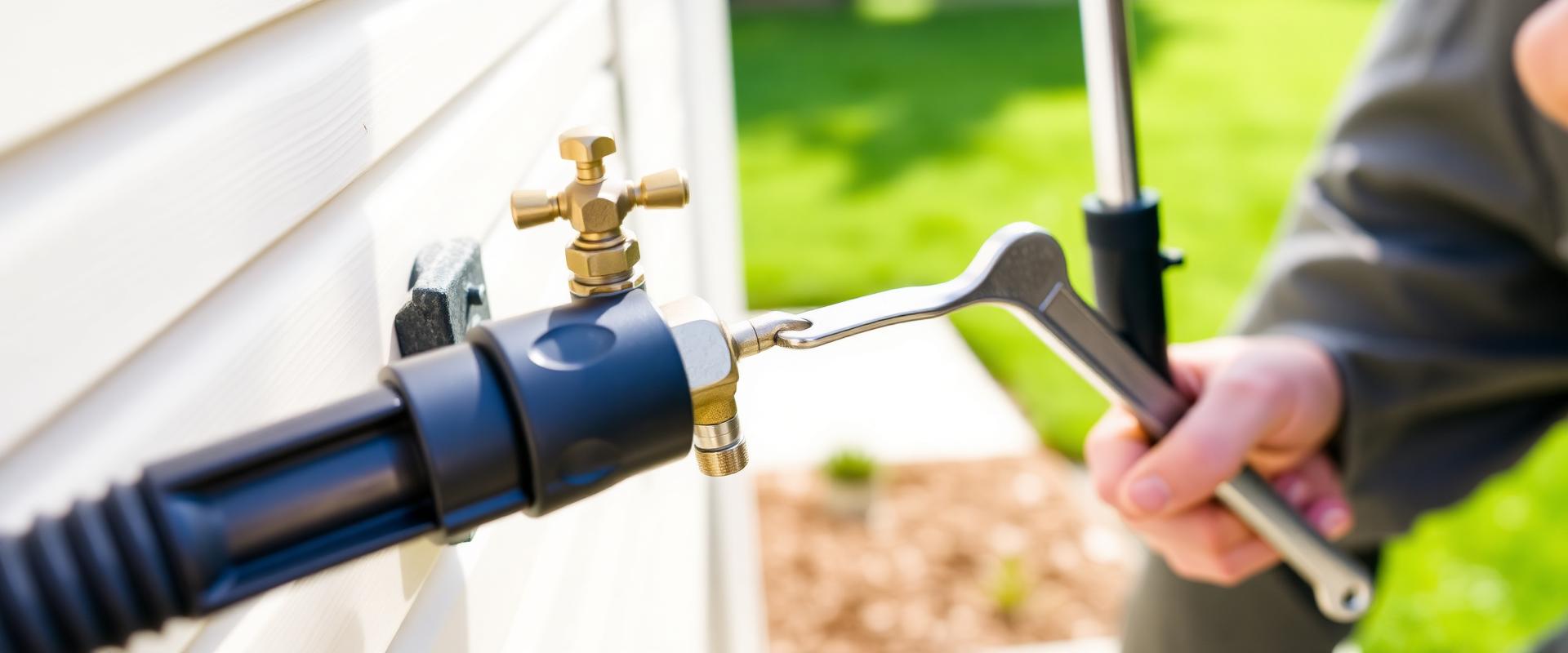
You turned the hose on for the first time this spring and something is wrong. The spigot drips when it is off, or water shows up on the basement wall a few feet inside from where the bib comes through, or the handle turns but nothing comes out. On the Front Range, the odds are it is one of two very different problems, and telling them apart before you call saves you a wasted service visit. A worn washer is a small repair. A freeze-cracked bib that split behind the wall is a different job entirely, because the failure is not at the spigot you can see. This guide walks the diagnosis, why our winters split standard sillcocks in the first place, and the exact point where a Saturday swap stops and a soldered connection behind the wall becomes licensed work.
Replace outdoor spigot in Denver: freeze crack or worn washer
A dripping or dead outdoor spigot in the Denver Metro is almost always one of two faults, and they point at completely different repairs. A worn packing washer or a bad seat drips at the handle or the spout and gets slowly worse over a season. A freeze crack splits the pipe behind the wall, where you cannot see it, and it usually does not leak until spring when you first pressurize the line. Here is how to sort which one you have:
If the water is at the handle or spout, you may have a repair on your hands. If it is inside the wall, you have a burst line, and that is not a washer. The rest of this post assumes you have narrowed it down and want to know what happens next.
Frost-proof vs standard sillcock: why the upgrade matters here
This is the detail that decides whether you are back out here next spring with the same wet wall. A standard sillcock shuts the water off right at the outside wall, which means water sits in the horizontal pipe stub inside the freeze zone all winter. A frost-proof sillcock (also called a freeze-resistant or frost-free hose bib) has a long stem, usually 8 to 14 inches, that moves the actual shutoff valve back inside the heated wall. When you close it, the pipe out at the wall drains empty and there is nothing left to freeze.
The math is simple once you see it. Replacing a cracked standard bib with another standard bib buys you the same failure on the same clock. Replacing it with a properly pitched frost-proof sillcock is the fix that actually ends the cycle, which is why on a freeze-related failure we quote the upgrade rather than a like-for-like swap. We cover the full job on our outdoor spigot and hose bib replacement page, frost-proof unit and flat-rate quote included.
> The freeze does not happen at the spigot you can see. It happens in the six inches of pipe behind the wall, which is exactly where a standard bib leaves water sitting all winter.
Want a hands-free or frost-free spigot handled before winter instead of after the next split? Call (720) 880-8064 and we will tell you the number before we start.
When a spigot swap is DIY, and when it stops
We mean it when we say do it yourself if the job is genuinely a fixture-level repair. We also mean it when we say some of these are not a Saturday project. Here is the honest line.
A surface-level repair or a screw-on replacement can be a homeowner job. If your bib threads onto a fitting or has a simple packing nut you can reach, replacing a washer or swapping a threaded hose bib is reasonable with the water shut off. Work this order:
1. Shut off the water to that line and open the spigot to drain it. Most homes have an interior shutoff on the branch feeding the exterior bib, often in the basement or crawlspace near where the pipe exits. Close it, then open the spigot outside to relieve pressure and let the line drain. 2. For a worn washer: back off the packing nut, pull the stem, and replace the washer and the packing. Reassemble and test at low pressure first. 3. For a threaded bib: unthread the old one, wrap the male threads with pipe-thread tape, and thread the new one on hand-tight plus a turn or two with a wrench. Do not overtighten and crack the fitting.
That last box is where most Front Range spigot jobs actually land, because the freeze failures split the pipe behind the wall and a frost-proof replacement has to be soldered or crimped to the supply line inside the heated cavity. If you thaw it and it leaks the moment water flows, the line has already failed and the repair is behind the wall. That is us, not you. Talk to us about frozen and burst supply line repair and we will open the line, make the connection, and set a frost-proof bib so it does not repeat.
Who to call to replace a spigot on the Front Range
Call a licensed plumber, not a handyman, the moment the job crosses into the wall. The reason is the connection type. An exterior bib on a Denver Metro home usually ties into copper supply with a soldered joint, and on pre-1970 stock you can hit galvanized steel that is corroding from the inside. Either one means the repair is a real plumbing connection, and on a freeze failure it also means fishing a new frost-proof sillcock through the rim joist or wall cavity and pitching it to drain.
We re-connect in PEX-A or sweat new copper depending on what we find, set a properly pitched frost-proof sillcock, and pressure-test before we close up. On older homes we check the branch line condition while the wall is open, because a freeze that killed the bib often exposes a supply line that was already tired. We confirm condition before we quote, and we never recommend re-piping a run on age alone.
Deft Plumbing is licensed, bonded, and insured in Colorado, and we serve the full Denver Metro along the Front Range, from Aurora and Lakewood to Arvada and Brighton. Whether it is a spigot that split over the winter or one you want upgraded to frost-proof before the next freeze, you know the total before we touch anything. No hourly surprises.
Ready to get it handled? Call (720) 880-8064 for flat-rate spigot and hose bib replacement, or read how we handle outdoor spigot and hose bib replacement across the metro.
Frequently asked questions
My outdoor faucet is dripping when it is off. What causes that?
A steady drip from the spout when the handle is fully closed is almost always a worn washer or a corroded valve seat inside the bib. Water is getting past the seal that is supposed to stop it. If the drip is around the handle stem instead of the spout, the packing nut or packing washer has worn. Both are fixture-level repairs. What is not a simple drip is water showing up inside the wall or on the basement ceiling near where the pipe enters, that points at a cracked line behind the bib, which is a burst-pipe repair, not a washer.
I have a frozen outdoor spigot. What should I do right now?
First, do not force the handle, because a frozen valve can crack if you crank it. Shut off the interior valve feeding that line if you can find it, so that if the pipe has split behind the wall it will not flood when it thaws. You can thaw an accessible, visible section of pipe gently with a hair dryer or hot towels, never an open flame. Then watch closely when it thaws: if water appears inside the wall or the bib leaks the moment it flows, the line has split and needs a plumber. A frozen bib that thaws and runs clean at full pressure with no interior leak may just need a frost-proof upgrade before next winter so it stops happening.
Is it worth upgrading to a frost-proof sillcock in Colorado?
On the Front Range, yes, it is the highest-value prevention move on an exterior spigot. Our daily winter freeze-thaw swing splits standard bibs by leaving water trapped in the freeze zone at the wall. A frost-proof sillcock moves the shutoff back inside the heated wall so the exterior pipe drains empty and has nothing left to freeze. It only works if it is pitched to drain and you disconnect the hose over winter, but done right it ends the annual spring-leak cycle. When we replace a freeze-cracked bib, we quote the frost-proof unit rather than a like-for-like swap for exactly this reason.
Get the spigot handled before winter
Deft Plumbing is licensed, bonded, and insured in Colorado, and we serve the full Denver Metro along the Front Range. Whether a bib split over the winter and you found it wet in spring, or you want the exterior spigots upgraded to frost-proof before the first hard freeze, the next step is a call.
Call (720) 880-8064 for flat-rate outdoor spigot and hose bib replacement, or read how we handle outdoor spigot and hose bib replacement and frozen and burst supply line repair across the metro. You know the total before we pick up a wrench. No hourly surprises.