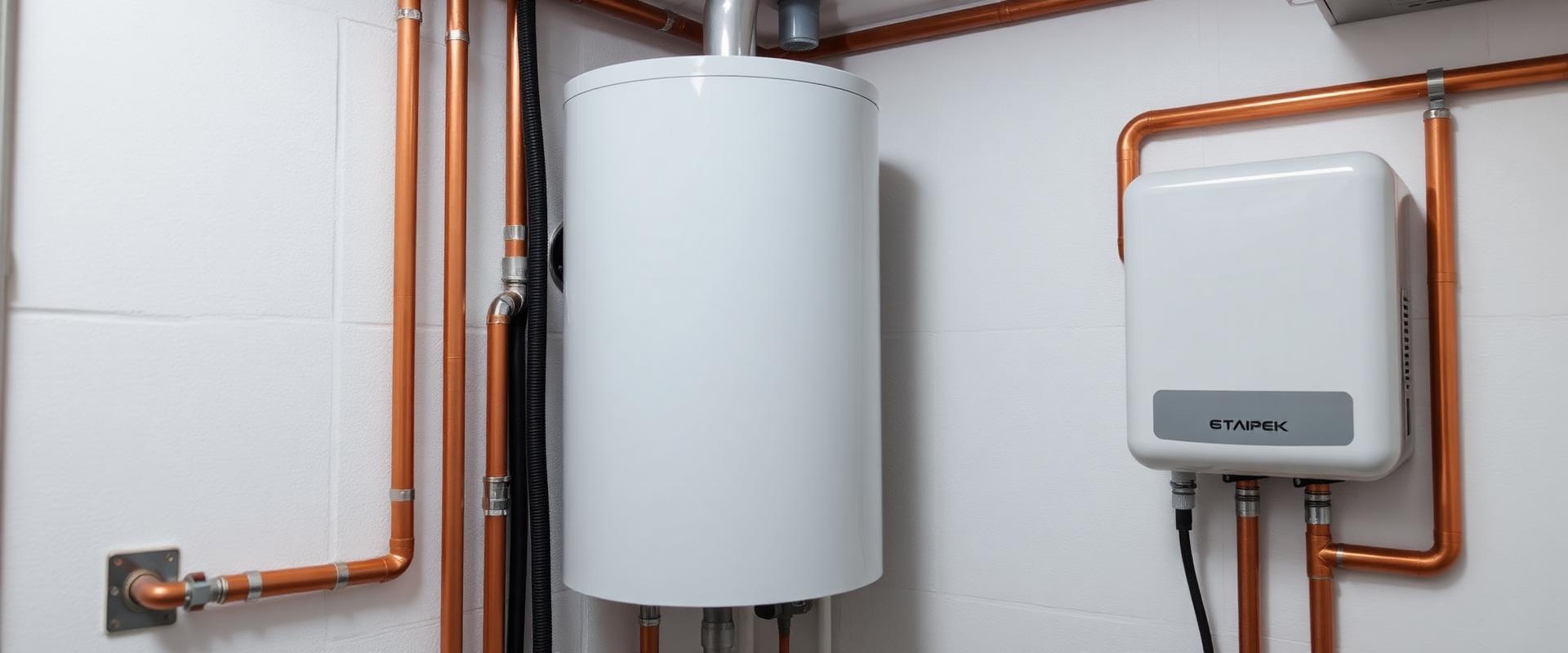
That popping, crackling, or low rumbling coming from your water heater is not the tank about to blow, and you can stop bracing for it. Here is the plain version: on the Front Range, that sound is almost always sediment. A layer of hardened mineral scale has built up on the bottom of the tank, and every heating cycle traps water underneath it that superheats and forces its way out. That is the pop. It tells you two useful things at once, that your tank is scaling up faster than it should, and that you are running one of the harder water supplies in the country. We will explain the mechanism, why it hits Denver homes years sooner than the manufacturer planned for, when a flush actually fixes it, and the one combination of symptoms that means stop flushing and call.
Why is my water heater making a popping noise?
A popping or crackling noise from a tank water heater is sediment on the tank bottom, full stop. Here is the mechanism in plain terms: minerals in the water settle out and harden into a crust of scale across the bottom of the tank, directly over the burner. When the burner fires, water gets trapped in the pockets under that scale, superheats past boiling, and blasts out through the crust. That escaping steam is the popping you hear.
The noise is not the danger. The scale behind it is the problem. That crust insulates the burner from the water it is supposed to heat, so the burner runs longer and hotter to hit the same temperature. Longer, hotter cycles cook the glass liner from the inside and burn through the anode rod faster, which is the chain that shortens the tank's life. A popping heater is not going to explode on you. It is telling you it is aging faster than it should, and on our water it usually starts talking around year three or four.
Water heater rumbling sound: is it the same thing or worse?
A deep rumbling or a rolling, boiling sound is the same root cause as popping, just further along. Where light popping means a thin scale layer with small trapped pockets, a heavy rumble means a thick sediment bed with large pockets of superheating water rolling and collapsing under it. Same mechanism, more of it. The rumble usually shows up on tanks that are older or have never been flushed, and on the Front Range that is most of them.
There is a specific reason we treat a rumble more seriously than a pop:
If your heater has gone from an occasional tick to a steady rolling rumble, that is the tank telling you the sediment has been building for a long time. Whether that is still a flush-and-recover situation or a tank on borrowed time depends on its age and condition, and that is exactly the call we make on a water heater repair diagnosis before recommending anything. You know the total before we touch anything.
How to flush sediment from a water heater
If your tank is under about five or six years old and the noise is light popping, a flush is genuinely worth doing yourself, and it can quiet the tank and buy back some efficiency. Here is the safe sequence.
1. Cut the heat source. On a gas heater, turn the gas control valve to "pilot" so the burner will not fire on an empty tank. On an electric heater, shut off the breaker feeding it. A burner or element that fires with no water around it self-destructs, so this step is not optional. 2. Shut the cold water supply off. Close the cold inlet valve at the top of the tank. 3. Let it cool, then hook up a hose. Give the tank time to drop below scalding temperature. Then connect a garden hose to the drain valve at the base and run the other end to a floor drain or outside. 4. Open a hot tap and the drain valve. Open a hot-water faucet somewhere in the house to break the vacuum, then open the tank's drain valve and let it empty. 5. Flush until it runs clear. Briefly reopen the cold inlet in short bursts to stir up the sediment and push it out through the drain. Repeat until the water coming out runs clear instead of cloudy or gritty. 6. Close up and refill. Shut the drain valve, remove the hose, close the hot tap once water flows steadily, reopen the cold supply, and only then restore the gas control or the breaker.
Do this once a year on our water and you meaningfully extend the tank's life. Skip it for five years and you can cut the remaining life nearly in half. If you would rather not wrestle a hose and a scalding tank, or you have hit the age line above where a flush gets risky, call (720) 880-8064 and we will handle it and tell you honestly whether the tank has years left or is near the end.
When the popping is not a flush anymore: the repair-versus-replace line
This is the part the search results above us skip, so here is the straight version. A flush treats the symptom on a young tank. It does nothing for a tank that has already scaled out and started to fail, and past a certain point, chasing the noise with a flush is throwing good money at a lost cause.
Here is why that combination changes the call. Discolored water means the glass liner is failing and the tank is corroding from the inside. At 8-plus years on Denver water, a tank is already at the far end of its realistic 7-to-10-year life. And moisture at the base means the inner tank may have started to weep. Flushing a tank in that condition can crack loose the very scale that was sealing a pinhole and turn a slow problem into a flooded utility closet. That is when we assess age and condition and give you the honest answer, whether it is a targeted repair diagnosis on a tank still worth saving, or the point where sediment has shortened the tank's life past repair and a straight replacement is the cheaper math over the next few years. We diagnose first. We do not recommend a replacement on age alone.
The expansion tank most Denver homes need
One more Front Range detail that rides along with any water heater work: most Denver Metro homes run a closed-loop system because there is a pressure-reducing valve on the main. On a closed loop, code requires a thermal expansion tank, because water cannot push back toward the street as it heats and expands. If your heater is replaced and the expansion tank is missing or waterlogged, the pressure spikes stress the tank and the relief valve, which can add its own knocking to the mix. When we replace a heater, that expansion tank is part of the flat-rate quote and it is checked at the city inspection. It is not an add-on line item that shows up later.
Frequently asked questions
Is a noisy water heater dangerous?
Not usually, and this is the reassurance worth having. Popping and rumbling are sediment noises, not a sign the tank is about to rupture. The temperature-and-pressure relief valve is the safety device that prevents a dangerous pressure buildup, and it is independent of the sediment doing the talking. What the noise does signal is a tank that is aging faster than it should and running less efficiently, and on an older unit it can ride alongside real end-of-life symptoms like a failing liner. So the sound itself is not an emergency. The reasons behind a steady, heavy rumble on an 8-plus-year-old tank are worth having looked at before it fails on its own schedule, which on the Front Range is sooner than the label promised.
How often should I flush my water heater in Denver?
Once a year on our water. Because Denver Metro supply runs 12 to 17 grains per gallon, sediment builds noticeably faster here than in soft-water regions, so the annual flush that is optional elsewhere is closer to required maintenance on the Front Range. An annual flush on a tank that is still young genuinely buys you years of life and keeps the burner efficient. Once a tank is past about eight years with heavy scale, though, flushing gets risky, and the smarter move is to have the tank's age and condition assessed rather than disturb sediment that may be the only thing holding back a leak.
Will a water softener stop the popping for good?
It stops new scale from forming, which is the actual cause, so on a new or fairly young tank a softener is the long-term fix for the noise and it protects whatever you install next. On a tank that has already crusted up and started rumbling hard, a softener will not dissolve the scale that is already there, so it will not silence an old tank on its own. This is why, when a heater has failed early on untreated water, we treat softening as part of the replacement math rather than an upsell. Softer water is how you stop repeating the 7-to-10-year cycle.
Get a straight answer on the noise
Deft Plumbing is licensed, bonded, and insured in Colorado, and we serve the full Denver Metro along the Front Range, from Aurora and Lakewood to Arvada and Brighton. Whether the popping is a young tank that just needs a flush, or a rumbling 10-year-old unit with discolored water that is telling you it is done, the next step is the same: an honest diagnosis before anyone quotes a dollar.
Call (720) 880-8064 or read how we handle a flat-rate water heater repair diagnosis across the metro. If the tank has scaled out past saving, we will point you to a straight hot water heater replacement instead of charging you for a fix that fails next winter. You know the total before we pick up a wrench. No hourly surprises.