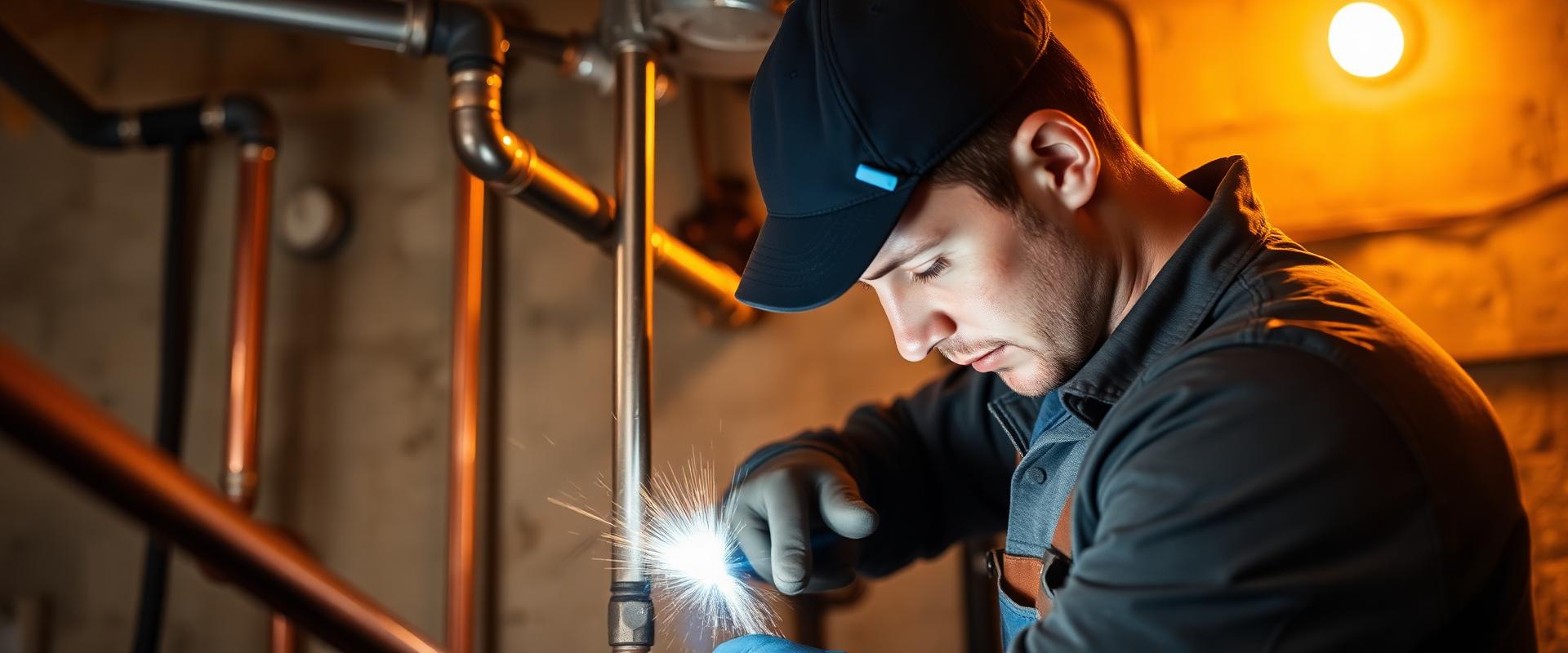
If your boiler quits in January, it will not quit at a convenient hour. It quits on the coldest night, when every heating tech in the Denver Metro is already booked, and a dead boiler on the Front Range is not just a cold house. It is frozen supply lines a few hours later. The good news is that most mid-winter boiler failures announce themselves in the fall, in ways you can hear, see, and smell before they leave you without heat. This is the pre-winter checklist: what a real annual service covers, the warning signs that predict a failure, and why altitude and freeze-thaw make this non-negotiable here. When it is time to book, we hand off to our boiler repair and installation team for a flat-rate quote before anything gets touched.
How to prepare a boiler for winter on the Front Range
Getting a boiler ready for winter is a fall job, not a first-freeze scramble. A proper annual service runs through the same core points every time: verify system pressure sits in the normal 12 to 15 PSI cold range, check and cycle the expansion tank, test the pressure relief valve, inspect and bleed the circulator and radiators or baseboard loops, clean the burner and check the flame, and verify the flue draws cleanly with no spillage. On a gas boiler we also confirm the gas pressure and look for any scale or sediment fouling the heat exchanger.
The other half of prep is the part homeowners skip: clearing what is around the boiler and the flue. A high-efficiency condensing boiler vents through PVC or the sidewall, and a Front Range snowdrift or an ice dam over that termination will shut the unit down on a safety lockout on the coldest morning of the year. We check the vent termination clearance as part of the service.
> The failures we get called out for in January are almost always the ones a fall service would have caught in October.
Booking the annual service now, while the weather is warm and the schedule is open, is the cheapest version of every repair below. Want it on the calendar before the first freeze? Book a pre-winter boiler service and you will know the flat-rate total before we start.
Boiler warning signs before it fails
A boiler rarely dies without warning. It tells you first, usually for weeks. Here are the signs we tell homeowners to act on before the cold sets in, because each one predicts a specific failure:
The pattern with all of these is that they escalate. A boiler that kettles in October fails in January. Catching the sign now is the difference between a scheduled repair on a flat-rate quote and an emergency no-heat call during a cold snap. If any of these sound like your system, have the fault diagnosed before the weather forces the issue.
How often should a boiler be serviced
Once a year, every year, before the heating season. That is the standard we hold to, and on the Front Range there is a specific reason it is not optional. Our hard water scales the heat exchanger and fouls safety controls faster than in soft-water regions, and our altitude changes how a gas burner has to be set up. Combustion air is thinner here, so the burner tuning that keeps a boiler efficient and safe at 5,280 feet drifts over a year of runtime and needs verifying.
When a repair is the right call, and when it is a replacement
We diagnose first, and we do not recommend replacing a boiler on age alone. A well-maintained cast-iron boiler can run a long time, and a single failed circulator, expansion tank, or ignition component is a repair, not a reason to replace the whole unit. Replacement earns its keep when the heat exchanger itself is cracked or badly scaled, when the unit short-cycles no matter what is serviced, or when repair costs start stacking on a boiler well past its service life. We tell you which one you are looking at, with the reason, and we quote the total before we pick up a wrench.
The freeze-thaw math is the last piece. When a boiler fails in a Front Range winter, the house does not just get cold. Our daily winter swing between a single-digit morning and a 45-degree afternoon works on unheated supply lines fast, and a house that loses heat overnight can lose pipes by morning. That is the same freeze-thaw cycling behind burst supply lines here, and it is worth reading how we handle preventing frozen and burst pipes on the Front Range alongside your boiler prep. A dead boiler and a burst pipe on the same night is the scenario the annual service exists to prevent.
Frequently asked questions
My boiler is making noise and not firing right before winter. Is that an emergency?
It depends on the symptom. Banging or kettling, slow ignition, or dropping pressure are not usually a same-night emergency, but they are signs the system needs service before the cold load hits, and they get worse if ignored. Any smell of gas or exhaust, a carbon monoxide alarm, or visible water leaking from the boiler is a stop-and-call-now situation. If you are hearing new noises or the burner is struggling in the fall, that is the ideal time to have it diagnosed, while it is a scheduled repair and not a no-heat call in a storm.
Can I service my own boiler before winter?
You can and should handle the basics: keep the area around the unit and the flue termination clear, check that the pressure gauge reads in the normal cold range, and bleed trapped air from radiators if you are comfortable doing it. The combustion side is different. Burner cleaning, gas pressure, flue draw, and the safety controls need a licensed tech, and at altitude the burner tuning has to be verified. Any gas work is not a DIY job. We handle the parts that carry a safety risk and confirm the whole system before winter.
How long does an annual boiler service take?
A straightforward annual service on a healthy system is typically a single visit. If the inspection turns up a fault, a scaled heat exchanger, a failing expansion tank, or a tired circulator, we diagnose the actual cause and quote the repair as a flat rate before we do the work. You will know the total up front. No hourly surprises.
Get your boiler ready before the first freeze
Deft Plumbing is licensed, bonded, and insured in Colorado, and we serve the full Denver Metro along the Front Range, from Lakewood to Arvada and Brighton, with dedicated boiler repair and installation in Aurora for the elevation and permit specifics on that side of the metro. Brighton homeowners can book a pre-winter boiler service in Brighton on the page built for that town's hard water and Adams County permit steps. Whether you want the annual service handled before the cold sets in, or you are hearing one of the warning signs above and want it diagnosed, the next step is a call.
Call (720) 880-8064 or book a pre-winter boiler service or diagnose a no-heat fault. We diagnose first and quote the total before we pick up a wrench. You know the cost before we start. No hourly surprises.